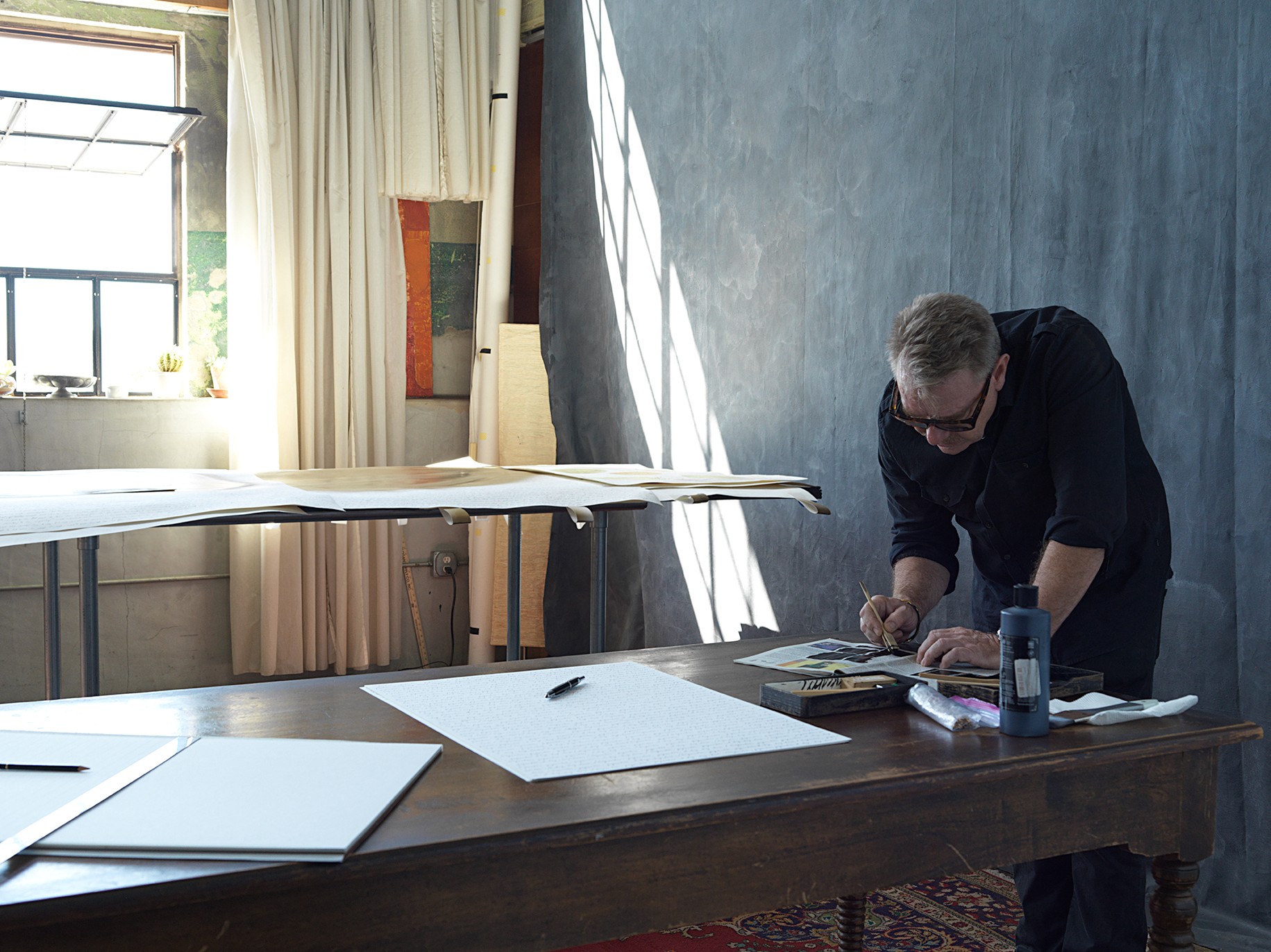
ARTIST DAVE SLODKI
by Danielle Benson and Tyler Sanderson
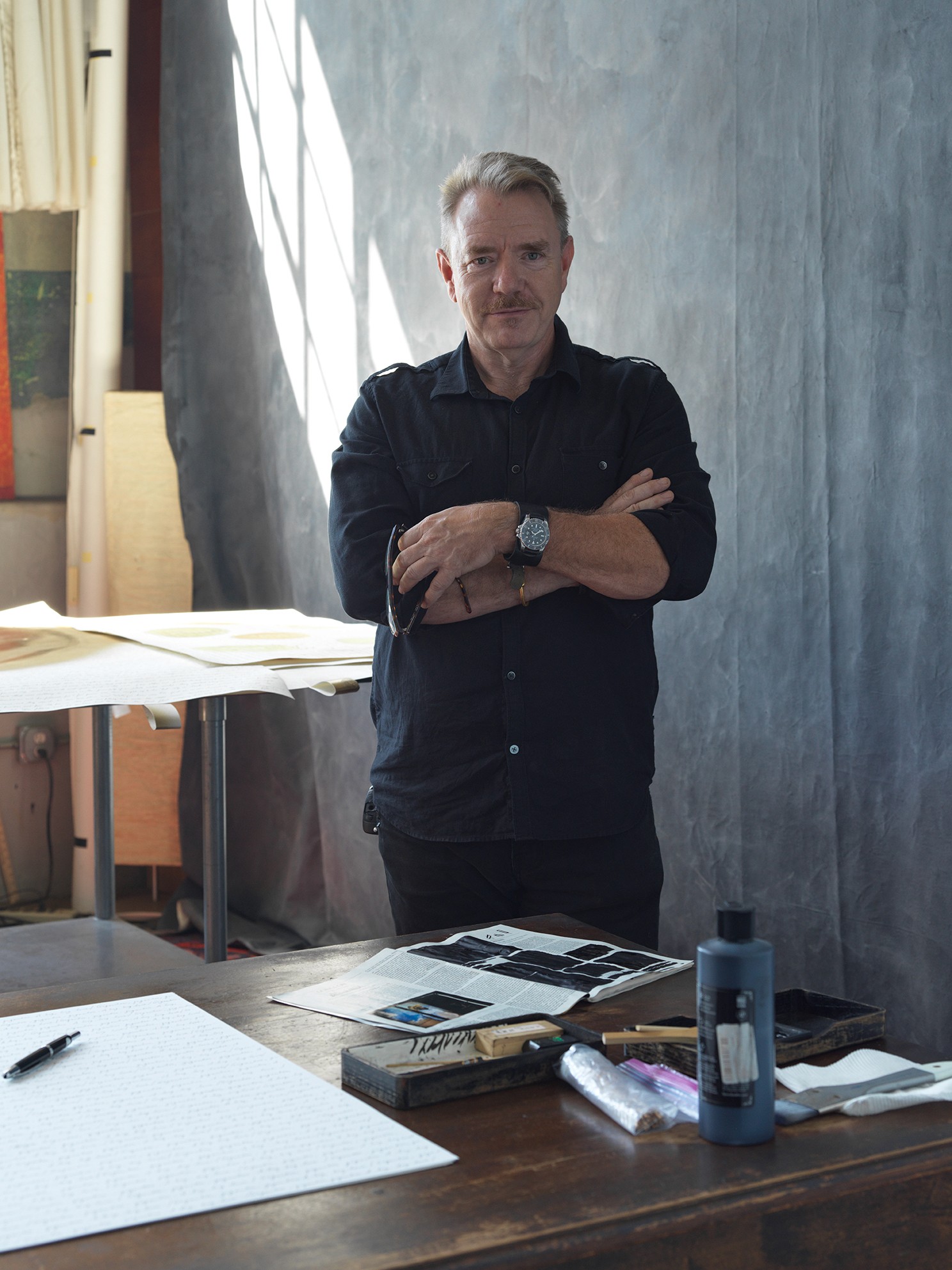
For various reasons including the height of summer, traffic was particularly outrageous as we made our way to Dave Slodki’s downtown loft. But upon arriving we were swept up and away from the city to his breezy light filled space. Gazing out towards the hills we begin to chat about various things including the slowdown of Hollywood, ghosting, introspection, and communication dynamics in relationships. It’s no coincidence that some of these topics exist as themes in his work. In talking with him, one finds that he speaks with creativity and care, all without sounding over measured or premeditated. It’s immediately apparent that he has a great reverence for words and the power that they hold within the human experience. A couple of weeks ago, a visit to Lucky Cat Labs in downtown found us admiring Dave’s first large format series, Delectation. Thousands of words are scrawled across four individual canvas pieces. Striking to begin with, but it doesn’t simply end with the painstakingly drafted writing. Each piece dons its own stylized “redaction” which leaves part of the story omitted or obstructed. The applications range from gold leaf to burn marks, each lending their own unique qualities and form of significance. The work is layered in every sense. Back in the loft, he serves us fresh espresso and we begin looking through his body of work. Test runs of his pieces are spread out on a large work table and we begin to ask him a few questions about the inspirations at the root of his work.
The handwritten aspect within some of your pieces began with a need to improve your penmanship?
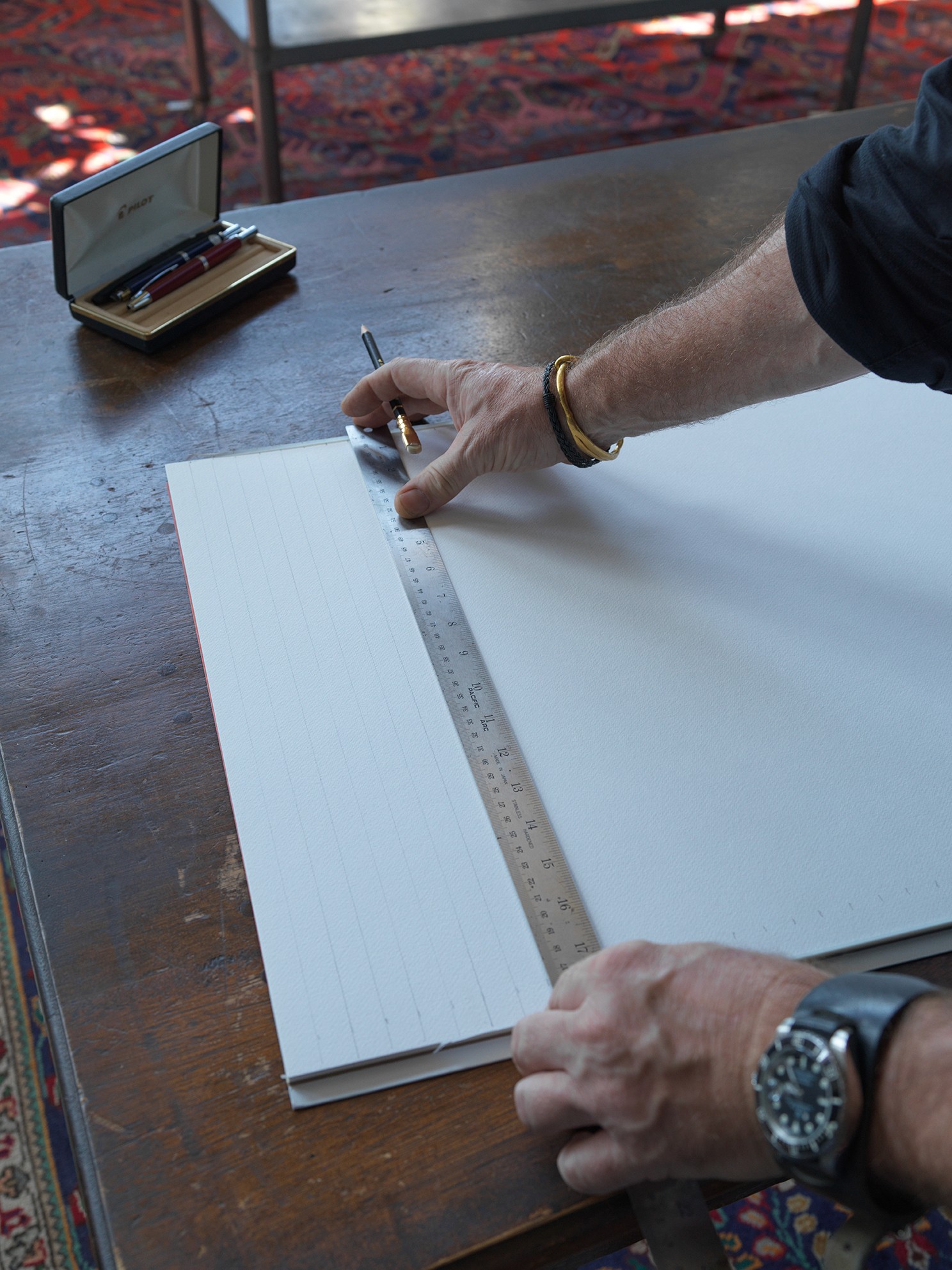
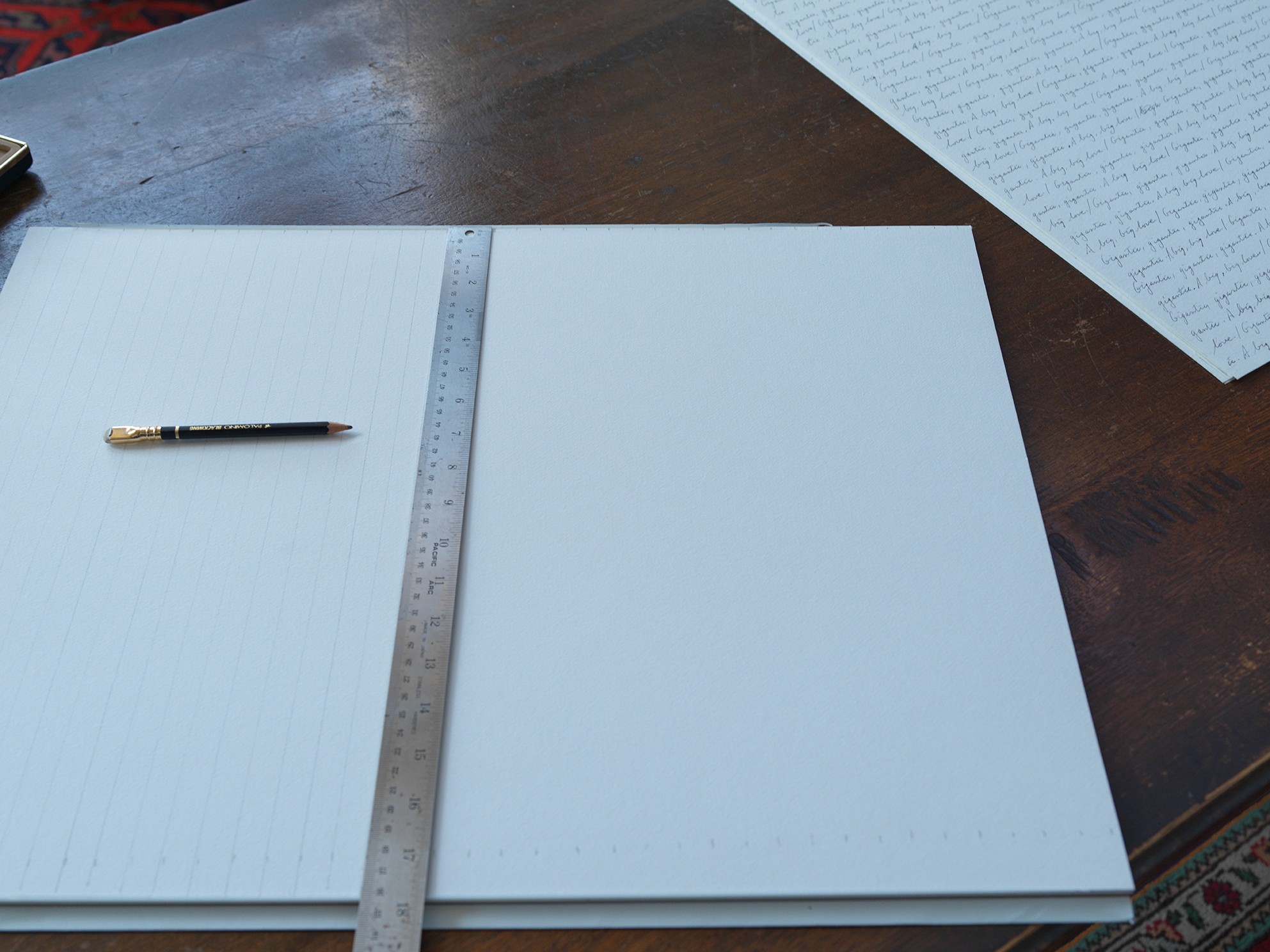
Yes. My handwriting had always been pretty lousy but over the years it had seriously deteriorated, to the point where I found myself at work printing out notes to leave for the morning crews. Which was aggravating. Around the same time I came across the Spencer method of handwriting, a method developed in the 19th century for use in commerce for ease of legibility (as opposed,to the florid Copperplate style- think the Declaration of Independence) as well as being comfortable for long periods of writing- remember, before the invention of the typewriter all business correspondence was handwritten. So I began practicing and one day I saw the practice sheets laid out on a table and it seemed to work both as function- expressive communication- and form, a particular organic texture of lines that to me held up aesthetically and could be implemented into other things.
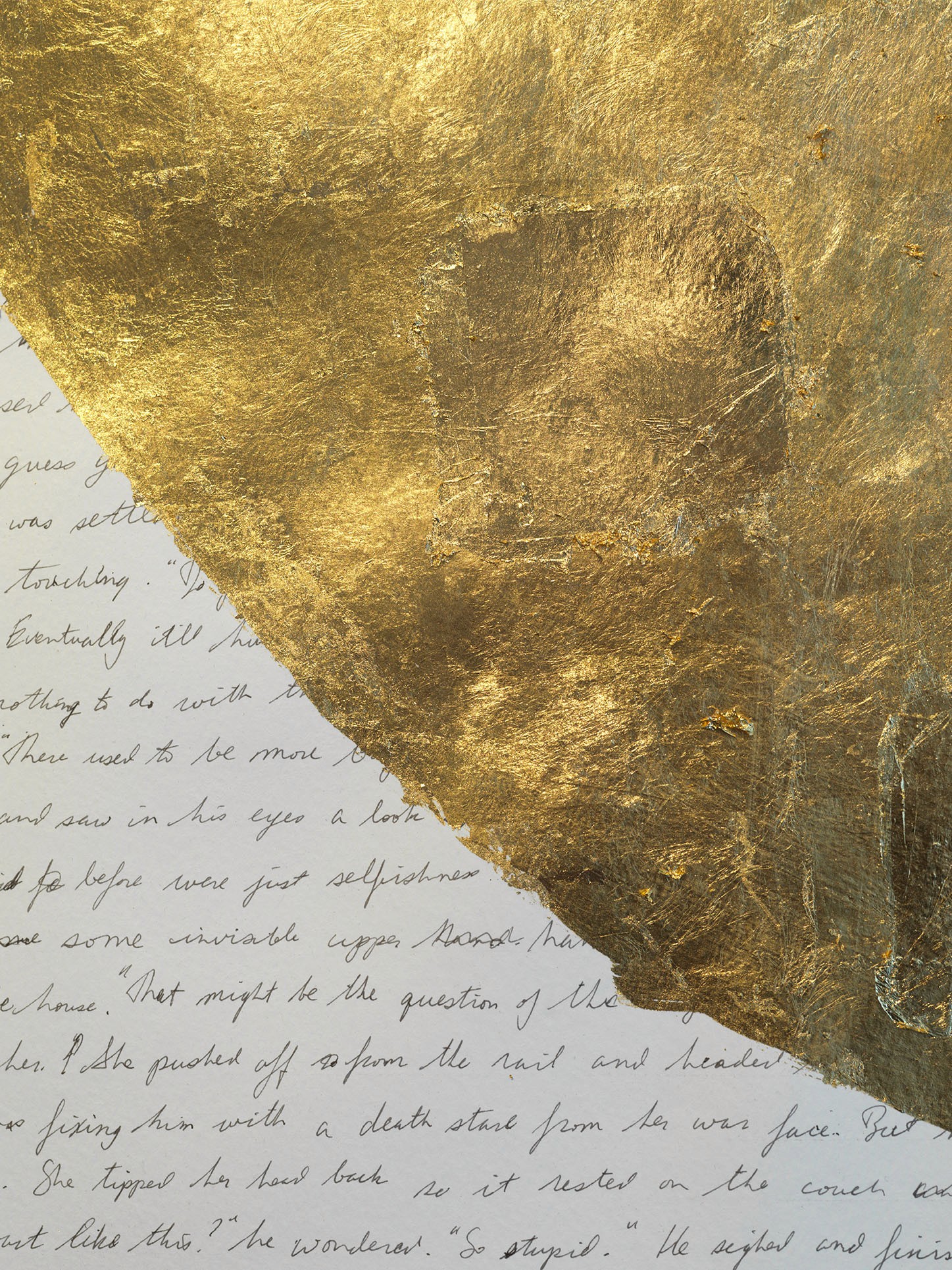
Above, right: Untitled #17 ("Delectation") water color paper, ink and gold leaf, 42"x60" 2019
Tell us about the process of creating your story pieces. What do you call them?
Frankly, I just call them the dots. And while they are all untitled, each series has sort of a nominal or informal title to me, depending on what’s being explored in the writing. And that’s also sort of the explanation of the process. All of them begin with something that’s been on my mind regarding text, language, narrative, and context. The first series was about meaninglessness in writing, how one finds passages in almost anything that when isolated from context are both eminently readable and yet utterly devoid of any information. The second series is about the fallibility of memory especially regarding read narratives, how what we remember of a story eventually starts to diverge from what a piece actually is. (Not dissimilar to the way a character one is, writing will often up and do something totally different than what a writer intends.) The third series, Delectation, is sort of a high wire act, the first long form piece I’ve handwritten that continues from sheet to sheet. It’s about 20,000 words-something like fifty pages transcribed to type and was written to the page. First, none of it was written beforehand. As you can imagine from the title, which came first, I originally imagined it to be very erotic and to use the circles to cover up large parts of the text as a tease for the reader/viewer. However, exactly as I mentioned above when writing fiction the characters, if they’re real enough, have their own ideas about what they’re up to and it very quickly became a coda to a novel I wrote twenty some years ago. These characters apparently had to come back around and give an update. So now what’s underneath the circles is heartbreak and loss and grief and the difficulty of true connection as people age instead of down and dirty smut.
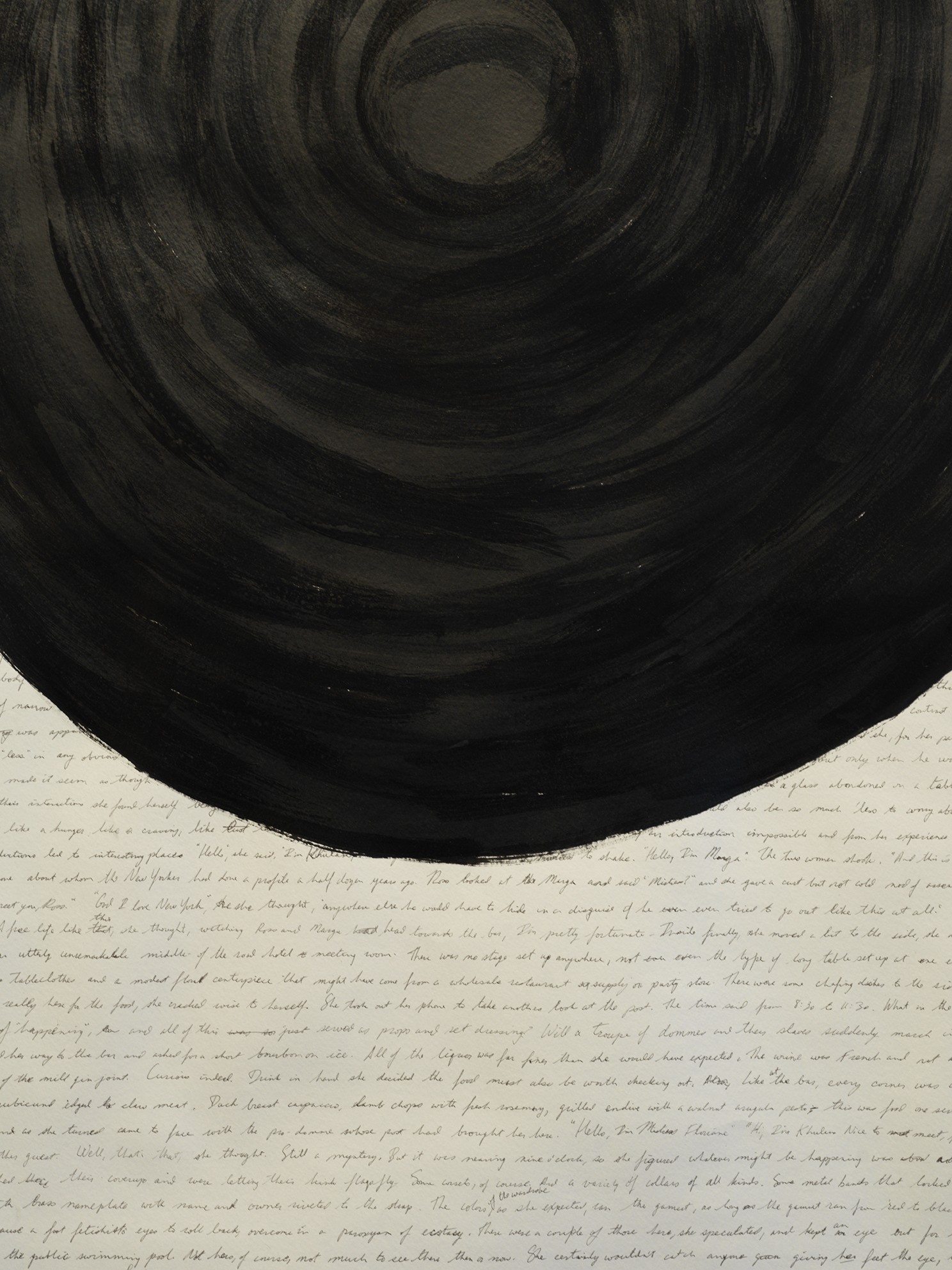
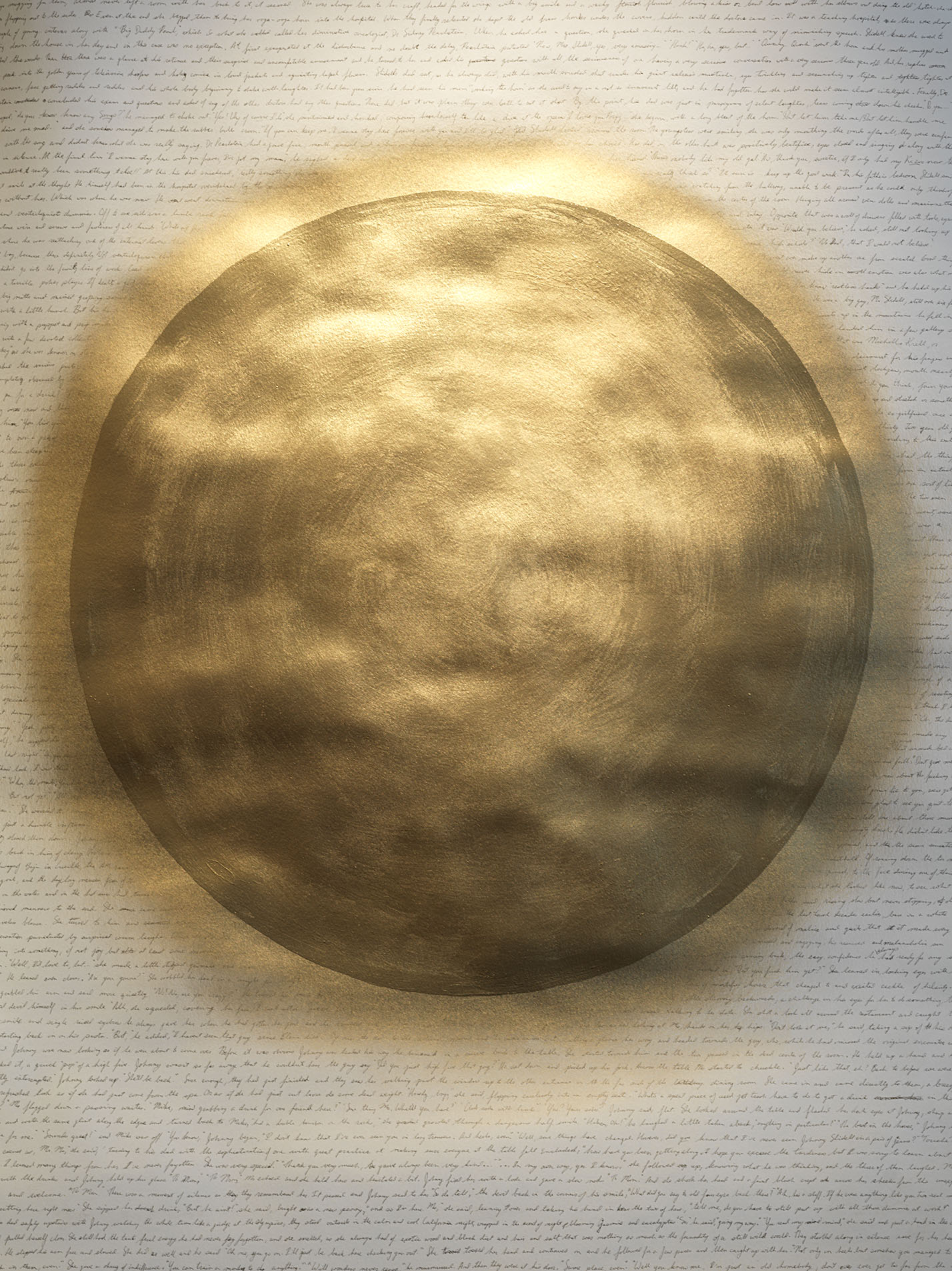
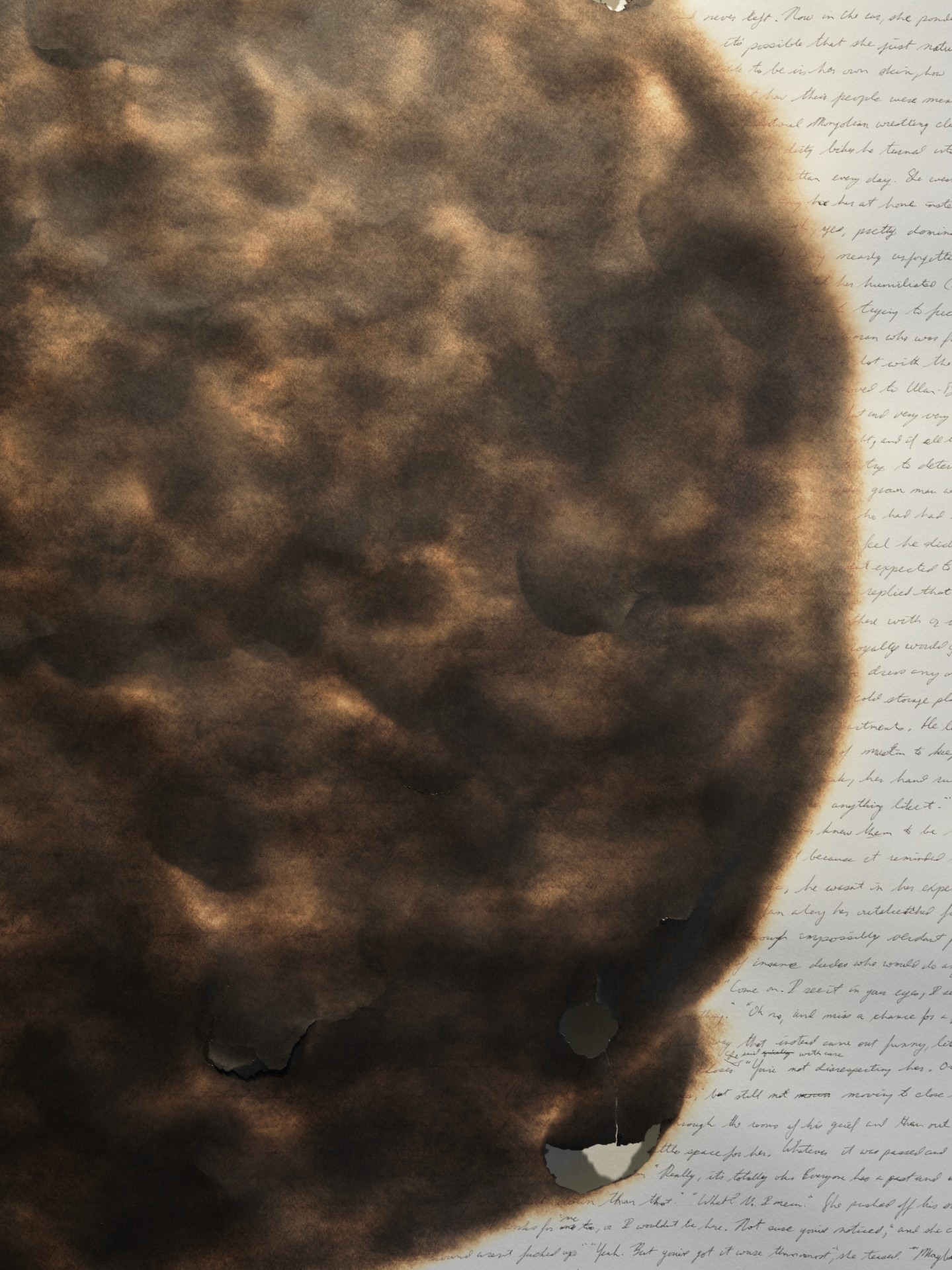
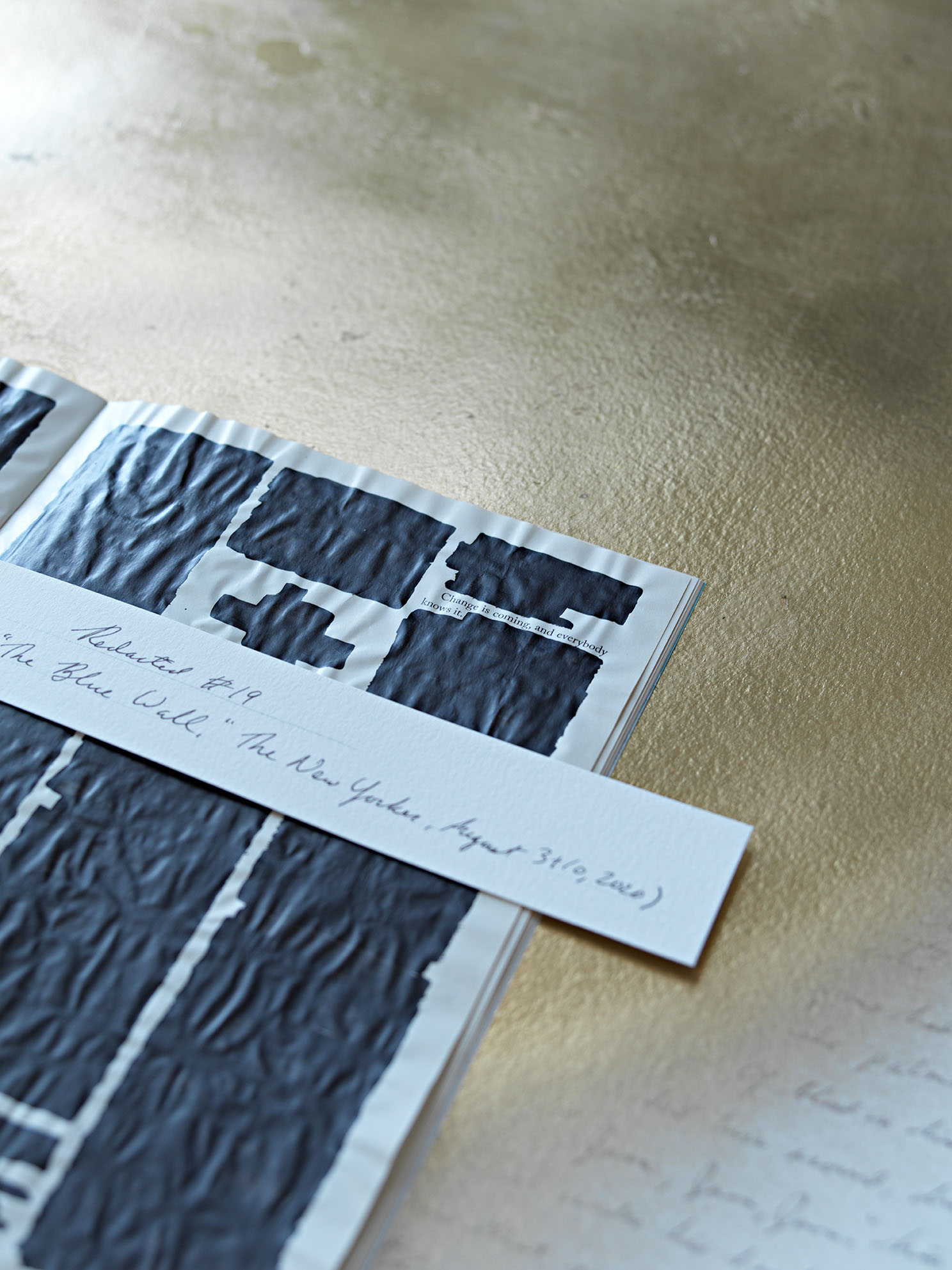
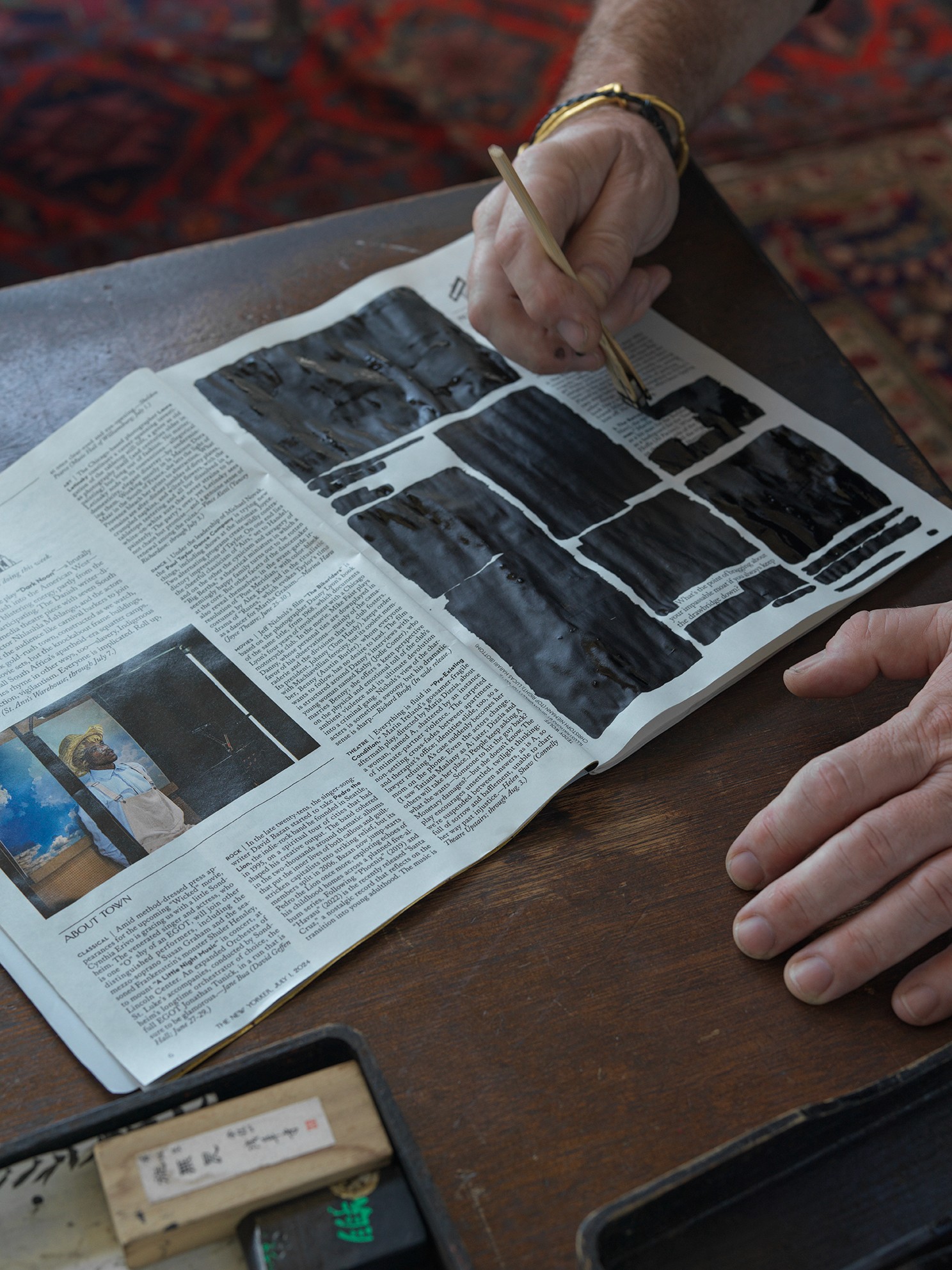
The article redaction pieces focus on one sentence with all of its surrounding context removed. Do you revisit these and experience the meaning of the lines shifting over time?
Every time. Some of those will be hard to part with.
Above Left: Untitled #17 ("Delectation") water color paper, ink, paper cement and paint 42"x60" 2019
Middle: Untitled #17 ("Delectation") water color paper, ink, paper cement and spray paint 42"x60" 2019
Right: Untitled #17 ("Delectation") water color paper, ink and fire, 42"x60" 2019
Is Los Angeles an inspiration?
No.
Above Left: Redacted #19, 2024
As we wrap up, Dave makes sure we’re not leaving empty handed. He ties up a generous bouquet of freshly harvested herbs from his garden along with a jar of coriander seeds. These gestures cement the attention to detail that is the complexity of the artist and his work. Driving back to Hollywood, we discuss the distinct moments of the visit and while we can agree that human memory is indeed always shifting, the impression of the afternoon will remain with us in all of the best ways.